

Australia’s thriving economy, low unemployment, and steady population growth continue to make it one of the most vibrant places to live and invest. However, matching housing delivery with Australia’s growing momentum remains an essential priority for policy leaders and the construction industry alike.
Australia’s population is growing, household demand is expanding, and the need for new homes is becoming increasingly important — creating a powerful long-term story for housing and property.
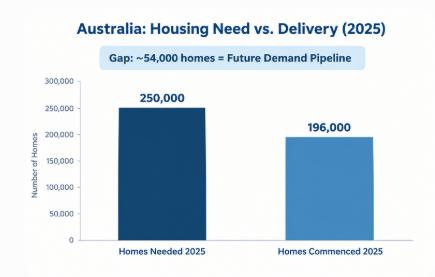
In its June 2026 analysis, HIA estimated that Australia needed to build more than 250,000 homes in 2025 to keep pace with demand growth and begin reducing the existing housing shortage. Actual construction commenced at around 196,000 homes.
The message is clear: Australia has a substantial pipeline of housing demand to meet.
Understanding the Real Demand for Housing
Even if population growth were to fall to zero, Australia would still need to build over 100,000 homes each year due to:
- Demographic & Lifestyle Trends: An aging population, accelerating household formation, and changing housing preferences.
- Economic Momentum: Strong economic activity and low unemployment, which naturally increase household independence and total demand for living spaces.
- Essential Replacement: The continuous need to replace older housing stock across Australia.
Furthermore, stable and reliable migration continues to serve as an essential driver for Australia’s long-term economic growth, government revenue, and labor force expansion.
Key Numbers at a Glance
- 196,000 Homes Commenced: The home building sector successfully commenced construction on nearly 200,000 homes last year, laying a strong foundation toward meeting expanding demand.
- $2 Billion Infrastructure Commitment: The federal government’s $2 billion budget allocation for housing infrastructure marks a major step forward in lowering land costs and expediting new housing supply.
- 1.2 Million Home Goal: Reaching the Housing Accord target of 1.2 million new homes provides a clear, vital benchmark for restoring housing affordability across all levels of government.
Actionable Pathways for a Brighter Housing Future
The HIA report highlights clear, practical solutions to ensure housing supply keeps pace with economic prosperity:
1. Targeted Infrastructure Funding
By directly funding essential infrastructure, governments can address rising land prices—which have outpaced building material and labor costs—and lower the barrier to entry for home builders.
2. Integrated Policy Frameworks
As recommended by the Parkinson Review, aligning migration, housing, and infrastructure policies into a unified system ensures housing supply proactively expands alongside population growth.
3. Unlocking Long-Term Supply
Achieving national targets like the 1.2 million homes target under the Housing Accord will unlock stable rental markets, improve overall affordability, and deliver secure housing for millions of Australians.
A Growing Population Creates Long-Term Housing Demand
HIA’s analysis also points to strong population growth as an important contributor to housing demand.
Australia’s population was expected to increase by approximately 420,000 people during 2025, including around 300,000 through net overseas migration.
As more people choose Australia as a place to live, work and build their future, the need for suitable housing naturally expands.
For property markets, this creates an important long-term dynamic: more households need more homes.
More People, More Households: The Hidden Demand Driver
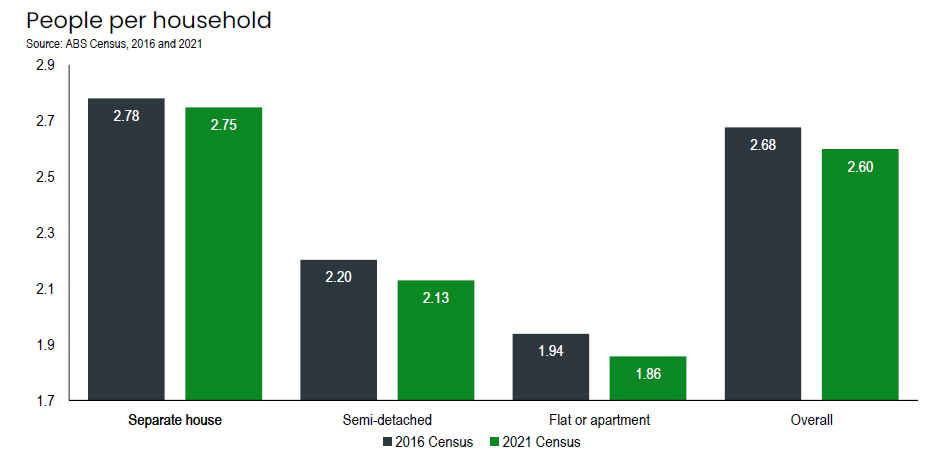
The average household size fell from 2.68 people in 2016 to 2.60 in 2021, with the decline seen across houses, semis and apartments. As households get smaller, more homes are needed to house the same population — adding to underlying demand beyond population growth.
Australia’s Housing Story Is a Long-Term Story
For buyers and investors, this creates a compelling reason to keep looking beyond today’s headlines and understand the bigger picture.
Australia is growing. Households are forming. Housing demand is expanding.
And as the nation plans for its future, property remains an important part of that story.
The Road Ahead
Australia’s demand for homes reflects a growing economy and strong national vitality. By addressing regulatory burdens, investing in infrastructure, and hitting key building targets, Australia has a clear roadmap to supply the homes its communities need for decades to come.
So, is Australia building enough? Today, construction is 54,000 homes short of what’s needed, but with targeted funding and the 1.2 million homes Accord goal, the roadmap to close that gap is clear.
Disclaimer: The information presented above is for illustration and discussion only. Any party seeking to rely on the content or otherwise should conduct its due diligence and inquiries to ensure that it is relevant to its personal and business needs and circumstances.