

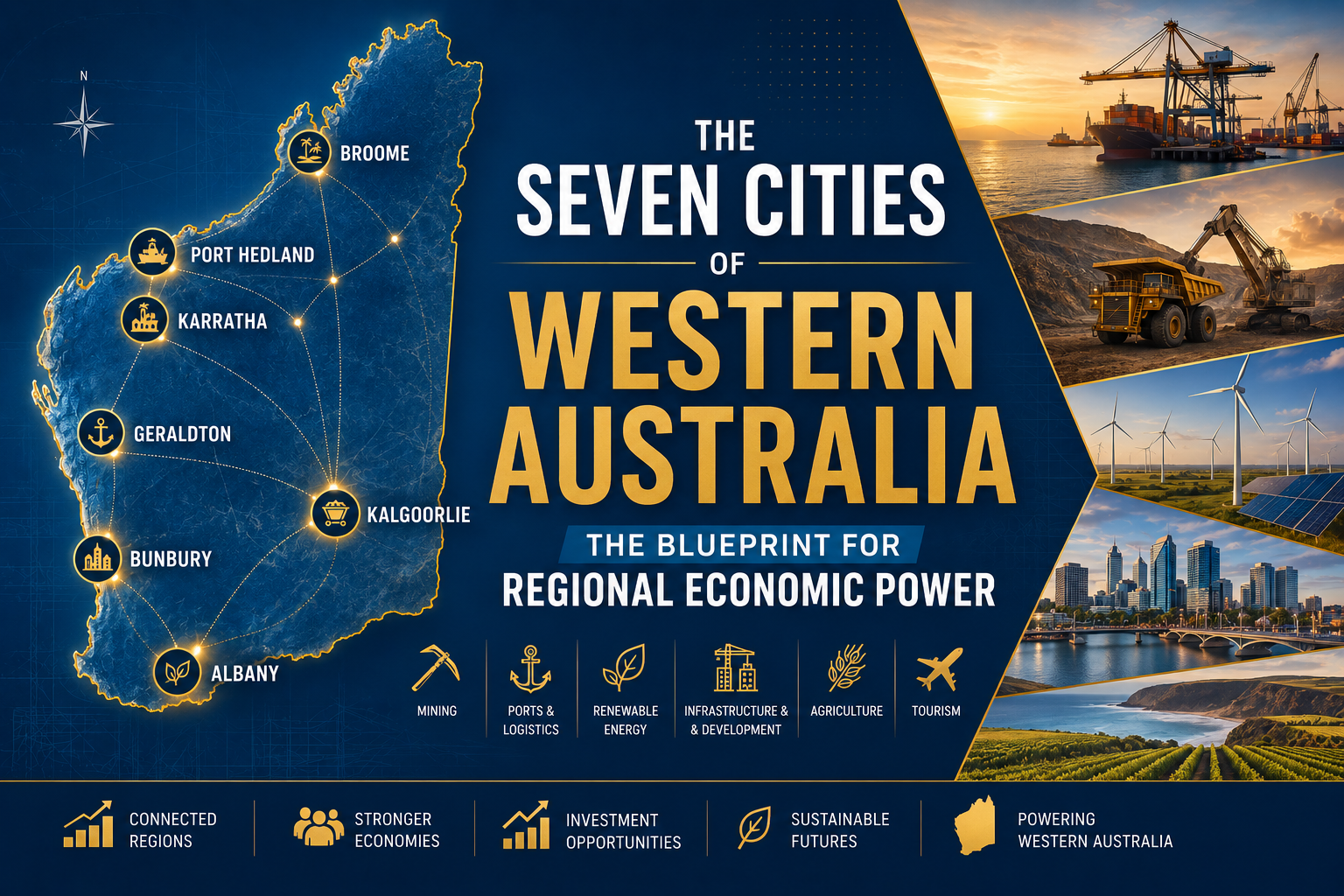
The Seven Cities Strategy, launched by the Cook Labor Government in 2026, is one of the most ambitious regional development frameworks in Australia. It is designed to transform regional WA into a network of economic powerhouses, reducing reliance on Perth and unlocking the next wave of industrial, energy, and population growth.
1. What is the Seven Cities Plan?
At its core, the strategy is a long-term economic transformation plan focused on:
- Building regional economic hubs
- Supporting renewable energy and advanced manufacturing
- Expanding infrastructure, housing, and services
- Strengthening regional population growth
The initiative is backed by the 2026–27 State Budget and future funding pipelines, ensuring continuous investment across decades.
> The 7 Strategic Cities
The government has identified seven key regional centres as anchors of growth:
- Bunbury
- Kalgoorlie
- Port Hedland
- Karratha
- Broome
- Geraldton
- Albany
These cities are not random—they are strategically chosen based on:
- Resource proximity (mining, agriculture).
- Port access and trade routes.
- Population base and service capacity.
- Future renewable energy potential.
2. Core Vision: From Mining State to Energy & Manufacturing Hub
WA has long relied on mining—but this plan shifts the state toward:
- Renewable Energy Powerhouse
- Focus on lithium, copper, and clean energy exports.
- Expansion of energy infrastructure and industrial hubs.
- Positioning WA as a global supplier of green energy materials.
👉 Example:
- Expansion of Lumsden Point (Port Hedland) into a renewable energy trade hub.
- Local Manufacturing Growth
- “Make more things in WA” strategy.
- Development of Strategic Industrial Areas (SIAs):
- Kemerton
- Boodarie
- Maitland
- Oakajee
- Diversified Regional Economies
- Tourism (Broome, Albany).
- Agriculture (Geraldton, Albany).
- Mining services (Kalgoorlie, Pilbara cities).
> Massive Infrastructure Investment
The plan includes multi-sector infrastructure upgrades:
- $89.1 million for key upgrades at Bunbury’s Casuarina Boat Harbour;
- $60 million to deliver a new 32-bed modular ward at Albany Health Campus;
- $45 million to support increased services between Perth and Bunbury when the Australind train service reopens next month;
- $40.7 million to deliver up to 111 new lots in the Broome North residential estate;
- $38.4 million for land assembly and water supply studies at Kemerton Strategic Industrial Area (SIA) near Bunbury and water supply studies and design works on an infrastructure corridor at Boodarie SIA near Port Hedland;
- $14 million to continue and expand Broome bus services to ensure locals and visitors have access to affordable and accessible public transport;
- $5 million to support Traditional Owner-led tourism and secure the long-term future of visitor experiences at Garaan-ngaddim Horizontal Falls near Broome; and
- $3.8 million to support Nexus Airlines’ continued operation of the Inter-Regional Flight Network (IRFN), providing direct links between Geraldton, Karratha, Port Hedland and Broome, removing the need to travel via Perth.
All of this is aimed at unlocking large-scale job-creating projects.
3. Housing: The Biggest Bottleneck (and Opportunity)
One of the most critical pillars of the Seven Cities plan is housing supply.
> Key Housing Commitments
- 500+ new homes for frontline workers.
- $419 million investment in housing.
- Total regional housing initiative: $692 million.
> Target Workforce:
- Teachers
- Nurses
- Police
- Government service workers
> Private Sector Partnerships
Major mining companies are co-investing:
- Rio Tinto: $100M
- BHP: $50M
- Hancock Prospecting: $20M
4. City-by-City Strategic Role
> Bunbury
- Industrial and logistics hub.
- Major transport upgrades.
- Strong population growth corridor.
> Kalgoorlie
- Mining services capital.
- Infrastructure upgrades to support expansion.
> Port Hedland
- Global export hub (iron ore + future energy exports).
- Expansion into the renewable trade.
> Karratha
- Energy and resources powerhouse.
- Major housing allocation (with Port Hedland).
> Broome
- Tourism + lifestyle economy.
- Infrastructure + housing expansion (Broome North).
> Geraldton
- Agriculture + port logistics hub.
- Health and infrastructure upgrades.
> Albany
- Southern regional capital.
- Healthcare investment and transport links.
5. Economic Impact
- Job Creation
- Thousands of jobs across:
- Construction
- Energy
- Manufacturing
- Public services
- Population Growth
- Encouraging migration to regional areas.
- Reducing pressure on Perth.
- Industrial Expansion
- Unlocking billions in private investment.
- Supporting export diversification.
- Stronger Regional Economies
- Each city becomes a self-sustaining hub.
- Supports surrounding towns and remote communities.
6. Why This Plan is a Game-Changer
- Decentralisation of Growth
Moves WA away from a Perth-centric economy.
- Long-Term Vision (Not Short-Term Policy)
Backed by:
- State budget commitments.
- Multi-year infrastructure pipeline.
- Public + Private Alignment
Government + mining giants working together.
- Addresses Core Constraint: Housing
Directly tackles the biggest barrier to regional growth.
7. Challenges & Risks
No major plan is without risks:
- Labour shortages could delay construction
- Execution complexity across multiple regions
- Housing delivery timelines vs demand urgency
- Dependence on global commodity cycles
> Investment & Property Market Implications
This is where it gets interesting for investors
- Regional Property Boom Potential
- Increased demand from workers.
- Government-backed growth corridors.
- Rental Growth
Low vacancy + workforce demand = rising rents.
- Infrastructure-Led Capital Growth
Transport + industry = land value uplift.
- Key Hotspots to Watch
- Karratha & Port Hedland (housing shortage + jobs).
- Bunbury (connectivity + proximity to Perth).
- Geraldton (logistics + agriculture).
8. Final Thoughts
The Seven Cities Strategy is not just a policy—it’s a structural shift in how Western Australia grows.
It combines:
- Infrastructure
- Housing
- Industry
- Energy transition
Into one unified vision.
If executed well, it has the potential to:
- Transform regional WA into Australia’s strongest economic network outside capital cities.
- Create sustainable, long-term growth corridors.
- Deliver massive opportunities for investors, businesses, and communities.
Disclaimer: The information presented above is for illustration and discussion only. Any party seeking to rely on content or otherwise should conduct their due diligence and inquiries to ensure that it is relevant to their personal and business needs and circumstances.